Saturday, February 12, 2011

An elephant by the Sea is waiting patiently


I will not, as a general rule, link to my own articles very often on this blog. But it's an interesting story about a 65-foot-tall elephant, and my first A1 package for The Press, so I thought it was worth sharing.

Photo credit: Anthony Smedile/The Press of Atlantic City.

Friday, February 11, 2011

Widescreen Award: Actress


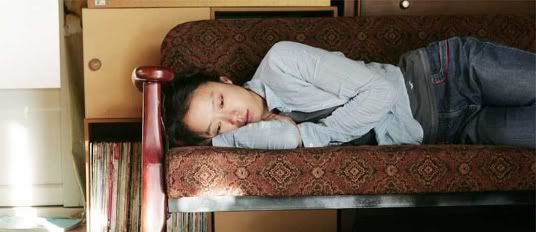
Shin-ae's pain never feels like an actor's approximation. Even as the character spins off into concentric circles of grief -- first at the death of her husband and, later, her son -- Jeon Do-yeon never treats her performance in Secret Sunshine like a master's class. Even when Shin-ae truly becomes unmoored in her search for solace, Jeon never devolves into histrionics. Despite the strange places the film takes Shin-ae, it's still a very real depiction of the confusion that comes with such loss.


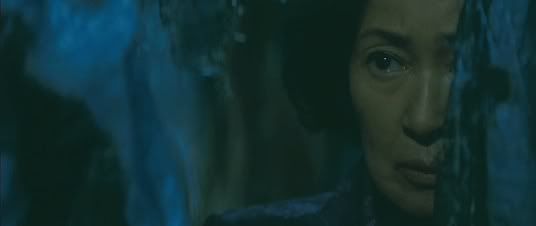
I've read that Bong Joon-ho picked Kim Hye-ja for the titular Mother because of her television persona as something of a June Cleaver. Not having that cultural context, the irony was lost on me. What wasn't lost in translation are the dark bonds between mother and son. Kim's face is so expressive; it tells you all that's to be said. Watch her face in the train station in the final minutes of the film. The walls all come crashing down and, yet, she's too strong to let them sit in ruin for long.


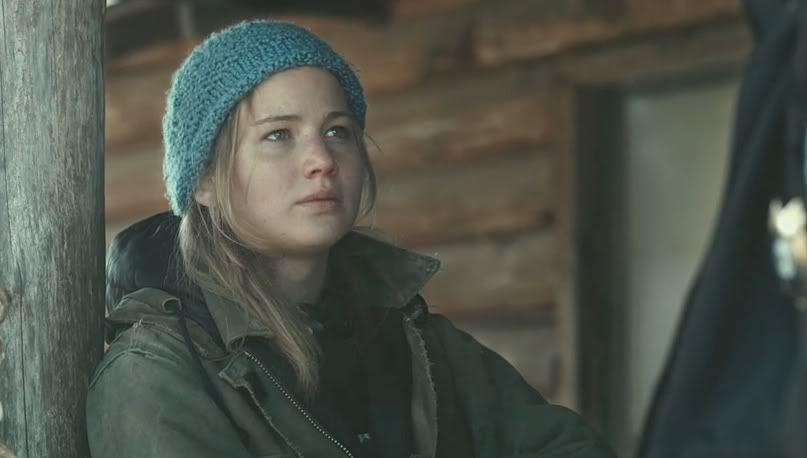
In Winter's Bone, Jennifer Lawrence disposes of precocious affectation right off the bat. Ree Dolly is deadly serious about finding her no-good father because she knows how daunting she and her young siblings' situation is. She's a force to be reckoned with, but Lawrence also tempers that determination with genuine fear. She is, after all, a kid. It's a delicate balance and the young actress pulls it off.


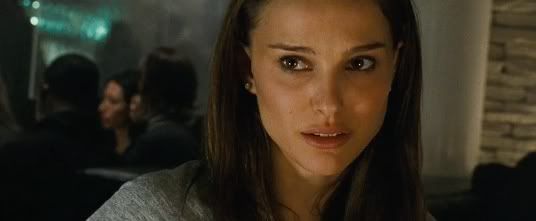
Even before the psychological torment overtakes Nina, Natalie Portman is a bundle of nerves in Black Swan. You can sense the gears grinding away in her head through cold stares and puffy eyes. The ambition, fear, jealousy, repression and weariness are all there long before the mirrors start summoning her inner demons out into the open. All she needed was that extra push -- a high-pressure role of a lifetime -- to send the whole roiling caldron bubbling to the surface.


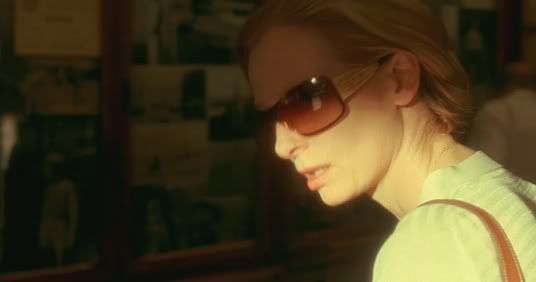
Out of all the performances last year, Tilda Swinton's Emma in I Am Love has perhaps the most interesting arc. She starts the film as cold steel, too lost in the goings on of her home to register as a human being with emotions. And then the floodgates open. It'd be very easy to lose the performance among all the beauty of Luca Guadgnino's film. But Swinton is too good an actress to play window dressing. When her character feels pleasure, as in the prawn sampling, her whole body joins in the rapture. At the same time, there's a great continuity between Emma at the beginning and at the end. She's the same person, now set free.

And finally, a shout-out to some of the wonderful performances that couldn't possibly fit into five slots in such a rich year for lead actresses. Annette Bening and Julianne Moore have a natural chemistry in The Kids Are All Right that transcends sexual orientation. Geena Davis' potty-mouthed divorcee was one of the saving graces of the uneven Accidents Happen. Kyōko Koizumi brings tremendous warmth to Tokyo Sonata, standing strong for her sons as the world disintegrates around her. Sarah Polley, known for her subtle touch, is all ablaze with the spirit of discovery in Splice. As stupidly provocative as the film tries to be, Noomi Rapace is fearless and fascinating in The Girl with the Dragon Tattoo.

Thursday, February 10, 2011

Widescreen Awards: Supporting Actor


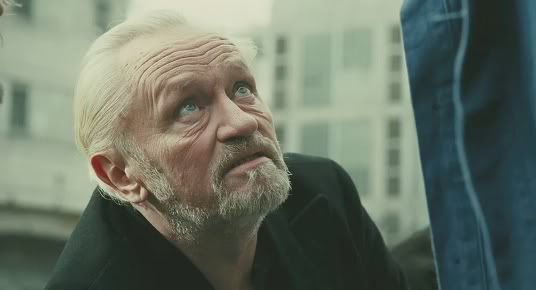
As prison-bound mob boss Cesar Luciani, Niels Arestrup starts off as an untouchable. He ends A Prophet, in true gangster flick form, as an empty shell of a man, deprived of all his power. Arestrup fills the space in between with a richness that's rarely found in this type of character. He's cold and remorseless, yet capable of trust. He's an unapologetic bigot, yet his protege and only true confidant is a "dirty Arab." It's a complex performance that never once feels forced.


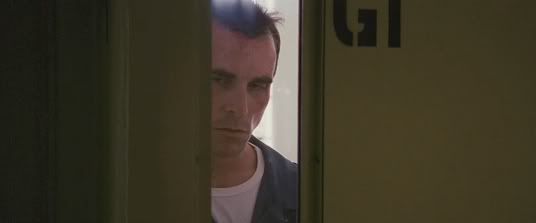
Until the real Dicky Eklund shows up over the end credits, you're apt to think Christian Bale's performance is all bluster and bombast. Fortunately (or unfortunately), the genuine article is just as nutty as the carbon copy. Even so, Bale is the heart and soul of The Fighter. He's the main source of conflict in the film, but he's also the only source of redemption. Beyond the impressive external performance (the gaunt appearance and involuntary tics of a junkie), Bale fills his Eklund with a rich internal life, as well.


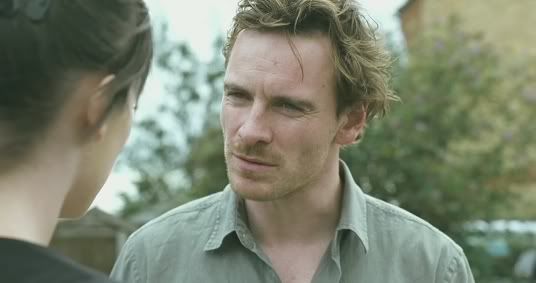
Make no mistake: Michael Fassbender's Connor, in Fish Tank, has been and always will be a monster. Fassbender seduces the audience along with his 15-year-old Lolita, and he does so while pretending to be a good, well-meaning guy. Even after his secret life -- behind a picket fence, no less -- is revealed, you can't help but think of him only as a pitiful misguided fool. It's a performance within a performance within a performance, and a stunning one at that.


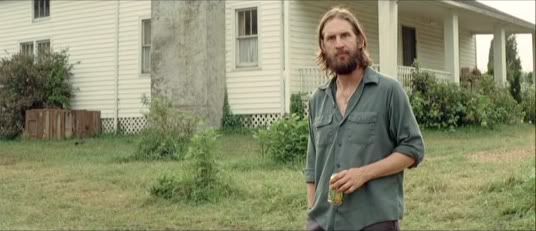
In Winter's Bone, John Hawkes successfully keeps the audience guessing about Teardrop. Even after he pulls through for Ree, there's a sense that he may not be so admirable a second time. In addition to that tightrope walk, Hawkes' characterization seems so specific to the time and place, you couldn't imagine him existing in any other movie.


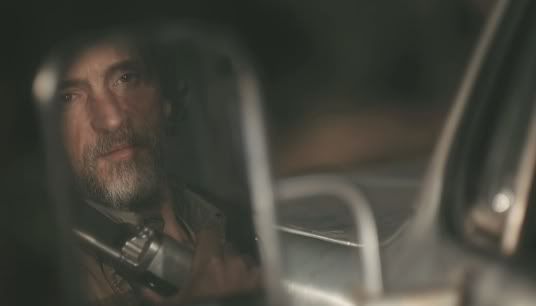
Lonzo Choate confuses providing for his family materially with being a good man. He always seems to have the best intentions, but his alcoholism and its root insecurities confront him at every turn. In That Evening Sun, Ray McKinnon manages to make Lonzo sympathetic even as he lashes out over and over again. He brings a lived-in quality to the character, even as he does the heavy lifting of reconciling the man's flaws and aspirations.

Wednesday, February 9, 2011

Gone baby, gone baby, don't be long


Not sure if it's the official video, but a hypnotic Erykah Badu song gets a hypnotic video (via ChromeMusic).

Widescreen Awards: Supporting Actress


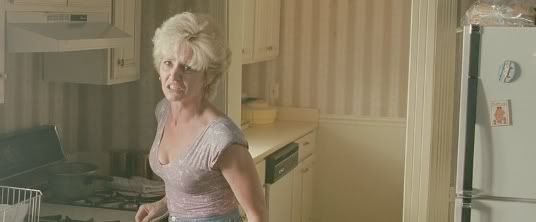
Although her performance skirts a little too close to the precipice that is the cliched monster mom, Melissa Leo strikes the right balance for The Fighter. It helps that you can see where Christian Bale's Dicky Eklund gets his dysfunction from. And, by the end of the movie, you're left convinced of Alice Ward's (often misplaced) love for her sons. She'd do anything for them, true, but it's seldom the right thing.


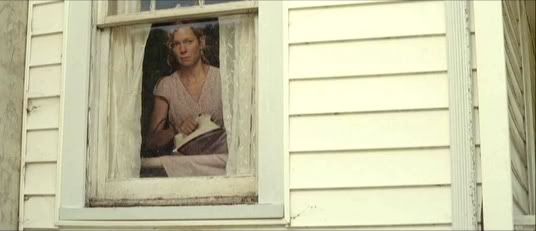
Perhaps best known as Clive Owen's Appletini-loving mark in "Duplicity," Carrie Preston turns in a quiet but captivating performance in That Evening Sun. Pushed aside in her alcoholic husband's escalating dispute with an elderly man, Ludie Choate's pain and uncertainty shines through in momentary glances. But there's still enough chemistry between her and the drunken lout Lonzo to understand why she stays.


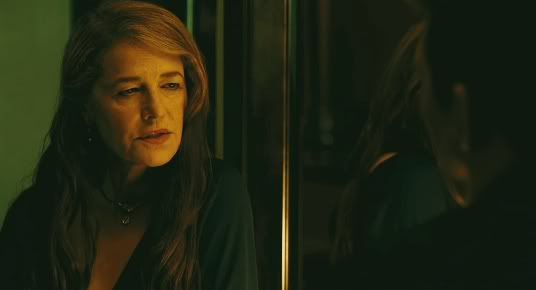
In just two scenes, Charlotte Rampling paints a nuanced picture of an aging barfly. The smell of thick perfume seems to waft off screen in Life During Wartime, in addition to the foul odor of desperation and self-pity. She's aggressive in the pursuit of her conquests, but at Jacqueline's core is a deeply insecure woman. "I'm a monster," she says, with no expectation to hear differently. It's as brutally honest and heartbreakingly funny as any film last year got.


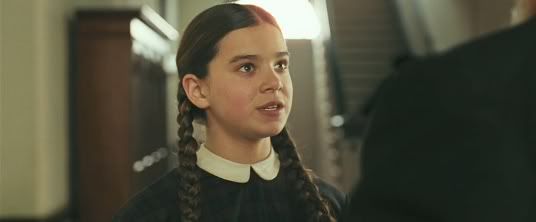
It's true that Hailee Steinfeld's Mattie Ross is closer to a lead than a supporting player in True Grit, but as Scott Rudin, the film's producer, pointed out, she doesn't exactly have an arc. Nor does she need one. Steinfeld nails this single-minded character, never seeming too precocious even while sparring with impetuous adults. It's a testament to Steinfeld that, even once we meet the woman (played by Elizabeth Marvel) she becomes, she's instantly recognizable. Aside from a lost limb, she hasn't changed a bit.


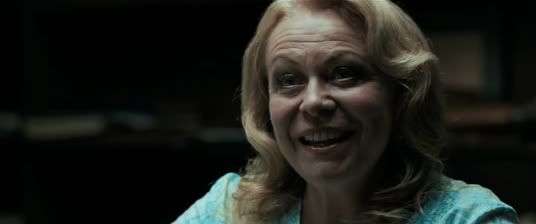
When we finally catch a glimpse of the facade that is Jacki Weaver's crime family matriarch Smurf Cody in Animal Kingdom, it's a revelatory moment. She's easily one of the best villains of the year, with her maternal hugs and broad smiles. At the same time she's scheming against her grandson, she's doing her damndest to protect her own troubled brood against the corrupt police. Can you blame her? (Well, yes, but still...)

Tuesday, February 8, 2011

Widescreen Awards: Ensemble Performance

The major awards bodies don't seem to get what an ensemble is. They tend to award films with the highest number of nominate-able performances (The King's Speech) or the most familiar faces (Black Swan) or both (The Fighter).

An ensemble is more about the collective. Although there can be, and often are, actors who stand out for one reason or another, very little of that is attributable to the filmmaker placing greater importance on one character or performance. In an ensemble, the entire cast works together for the betterment of the whole production and actors tend to have more uniform screen time.

The argument could be made that some of my choices stretch the boundaries this definition (Fish Tank and That Evening Sun have very distinct protagonists), but they still find the time for strong supporting characters and interesting subplots.


Fish Tank: Katie Jarvis, Kierston Wareing, Michael Fassbender and Rebecca Griffiths, Harry Treadaway

The oppressive world of Mia, the 15-year-old aspiring dancer at the heart of Fish Tank, is due in no small part to its cast. If they weren't comfortable diving headfirst into the uncomfortable, the film would've come across as stilted. As it is, the dysfunction feels organic to the situation. And, even at that, its tempered by real human compassion.


Life During Wartime: Shirley Henderson, Allison Janney, Ally Sheedly, Ciarán Hinds, Dylan Riley Snyder, Michael Lerner, Charlotte Rampling, Michael K. Williams, Paul Reubens and Rich Pecci

Life During Wartime is a veritable smorgasbord of compact yet wonderful performances. With a cast so large, Solondz's camera doesn't spend too much time aimed at any one actor. From Paul Reubens jilted figment of Shirley Henderson's imagination to Rich Pecci's China-obsessed, socially inept shut-in, they all make the best of it and they all contribute to the overarching story.


Night Catches Us: Anthony Mackie, Kerry Washington, Jamara Griffin, Wendell Pierce, Jamie Hector and Amari Cheatom

Recruiting two of its main supporting actors from the ranks of “The Wire,” Night Catches Us features some of the best casting of any film this year. There are no stand-outs, but they all pull their weight like a true ensemble. Jamara Griffin, in particular, turns in a realistically grounded performance as Kerry Washington’s inquisitive young daughter. For once, a movie child that looks and acts like a child, sans the capital-M maturity and sentimentality that adult filmmakers like to project onto them.
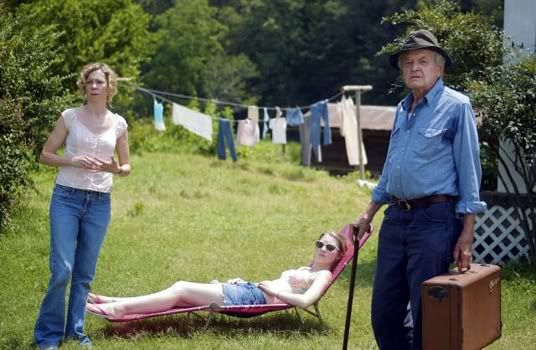


That Evening Sun: Hal Holbrook, Ray McKinnon, Carrie Preston, Mia Wasikowska, Walton Goggins, Barry Corbin and Dixie Carter

That Evening Sun offers stellar performances by a number of underappreciated familiar faces. Ray McKinnon and Carrie Preston, as the rent-to-buy tenants of Hal Holbrook’s old farm, work wonders with what could have been stock characters. “That Evening Sun” is lent even greater poignancy by the late Dixie Carter, an ethereal presence in the film and Holbrook’s wife onscreen and off,


Tokyo Sonata: Teruyuki Kagawa, Kyôko Koizumi, Yû Koyanagi, Kai Inowaki, Haruka Igawa and Kanji Tsuda

The cast of Tokyo Sonata does an almost miraculous thing. The family in the film feels like a real family coping with all the trials and tribulations real families do. There's little melodrama here; just a turning point in the life of a family that's at once universal and distinctly Japanese.

Monday, February 7, 2011

Widescreen Awards: Original Screenplay


Bong Joon-ho and Park Eun-kyo’s Mother is full of the kind of rich characterizations and subtly humorous dialogue that transcends language barriers. Even through the warped perception of subtitles, the film translates as a quietly human drama with the promise of new discoveries upon future viewings.

Originally penned by an Australian, Max Mannix, and reworked by Kiyoshi Kurosawa and Sachiko Tanaka, Tokyo Sonata never feels like cinema-by-committee. It tells a familiar story — fired businessman fakes employment — with novel specificity. The characters come fully formed, their actions — even one incredible final-act aberration — springing organically from their situation.

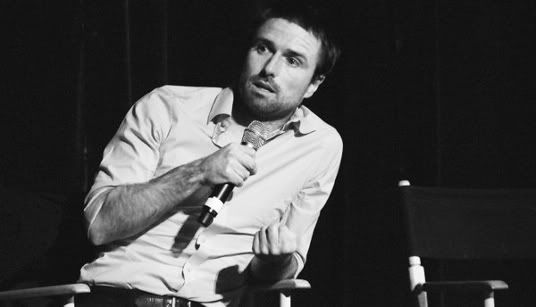
Every word and action in David Michôd’s (pictured) crime saga Animal Kingdom amplifies and contorts the conventions of the genre. The viewer gradually forms a picture of this crime family that is not only unglamorous, but downright ugly. Everyone, including the outwardly unfazed matriarch, is just running scared.

Splice is a nifty take on the “Frankenstein” mythos, with Adrien Brody taking the part of a complicit Elizabeth, the unwilling participant-turned-victim. Even if it takes a frighteningly negative position on the role of science, the screenplay — by director Vincenzo Natali, Antoinette Terry Bryant and Doug Taylor — makes entertaining and provocative film fodder.

In revisiting the characters from 1998’s “Happiness,” Life During Wartime writer-director Todd Solondz has crafted a poignant rumination on forgiveness. Its characters veer around the blind curves of grief and shame with reckless abandon and a dry wit that’s as refreshing as it is heartbreaking.