Showing posts with label Black Swan. Show all posts

Friday, February 11, 2011

Widescreen Award: Actress


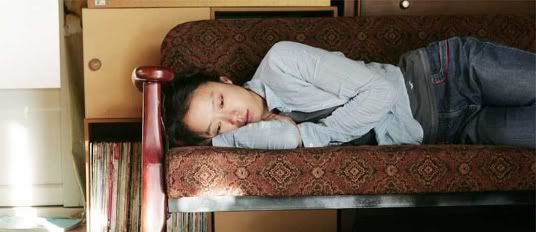
Shin-ae's pain never feels like an actor's approximation. Even as the character spins off into concentric circles of grief -- first at the death of her husband and, later, her son -- Jeon Do-yeon never treats her performance in Secret Sunshine like a master's class. Even when Shin-ae truly becomes unmoored in her search for solace, Jeon never devolves into histrionics. Despite the strange places the film takes Shin-ae, it's still a very real depiction of the confusion that comes with such loss.
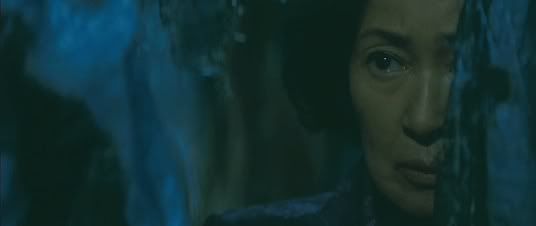


I've read that Bong Joon-ho picked Kim Hye-ja for the titular Mother because of her television persona as something of a June Cleaver. Not having that cultural context, the irony was lost on me. What wasn't lost in translation are the dark bonds between mother and son. Kim's face is so expressive; it tells you all that's to be said. Watch her face in the train station in the final minutes of the film. The walls all come crashing down and, yet, she's too strong to let them sit in ruin for long.
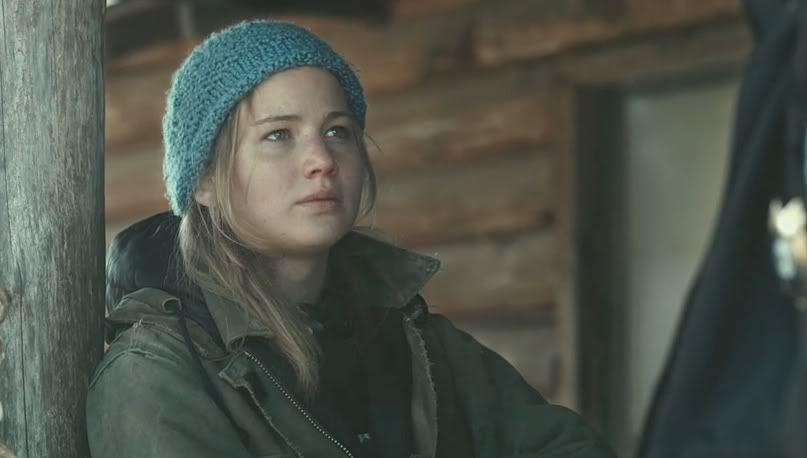


In Winter's Bone, Jennifer Lawrence disposes of precocious affectation right off the bat. Ree Dolly is deadly serious about finding her no-good father because she knows how daunting she and her young siblings' situation is. She's a force to be reckoned with, but Lawrence also tempers that determination with genuine fear. She is, after all, a kid. It's a delicate balance and the young actress pulls it off.
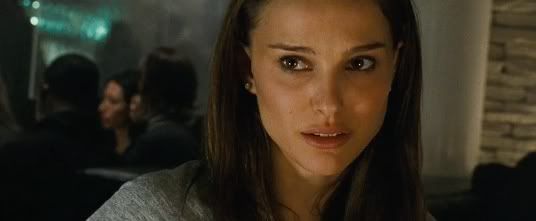


Even before the psychological torment overtakes Nina, Natalie Portman is a bundle of nerves in Black Swan. You can sense the gears grinding away in her head through cold stares and puffy eyes. The ambition, fear, jealousy, repression and weariness are all there long before the mirrors start summoning her inner demons out into the open. All she needed was that extra push -- a high-pressure role of a lifetime -- to send the whole roiling caldron bubbling to the surface.
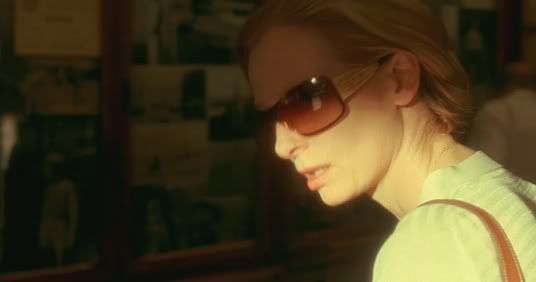


Out of all the performances last year, Tilda Swinton's Emma in I Am Love has perhaps the most interesting arc. She starts the film as cold steel, too lost in the goings on of her home to register as a human being with emotions. And then the floodgates open. It'd be very easy to lose the performance among all the beauty of Luca Guadgnino's film. But Swinton is too good an actress to play window dressing. When her character feels pleasure, as in the prawn sampling, her whole body joins in the rapture. At the same time, there's a great continuity between Emma at the beginning and at the end. She's the same person, now set free.

And finally, a shout-out to some of the wonderful performances that couldn't possibly fit into five slots in such a rich year for lead actresses. Annette Bening and Julianne Moore have a natural chemistry in The Kids Are All Right that transcends sexual orientation. Geena Davis' potty-mouthed divorcee was one of the saving graces of the uneven Accidents Happen. Kyōko Koizumi brings tremendous warmth to Tokyo Sonata, standing strong for her sons as the world disintegrates around her. Sarah Polley, known for her subtle touch, is all ablaze with the spirit of discovery in Splice. As stupidly provocative as the film tries to be, Noomi Rapace is fearless and fascinating in The Girl with the Dragon Tattoo.

Sunday, January 30, 2011

Widescreen Awards: Art Direction

Film is an artificial medium. When I first started watching movies
— for the record, the first theater experience I can remember is Jurassic Park when I was five or six years old
— that never crossed my mind. It's not that I believed everything on screen was really happening, but it's just not something you think about for a long time.

But decisions go into everything, from the color of the protagonist's car to which pen he uses and how he signs his name. There are seemingly infinite possibilities when it comes to these things, but the best films use these choices to say something about the character or the scene. These films, in my opinion, have done that the best.

Briefly, some useful film vocab: A production designer is responsible for the overall visual appearance of a film.
A set designer or decorator is in charge of translating the production designer's vision, choosing furnishings and other items seen on a given set.
An art director oversees the workers who actually build the sets. Lower budget films, such as Life During Wartime, sometimes forgo either the set designer or art director.


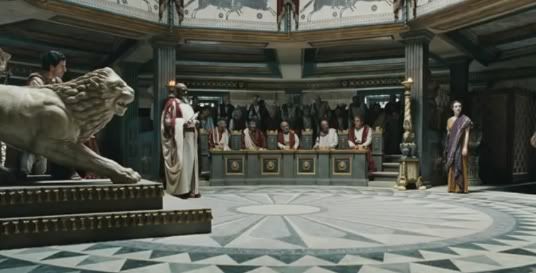
Agora realistically recreates Roman Alexandria, in the process resurrecting the style of the 1950s sword-and-sandal epic. The attention to detail in the film is awe-inspiring. And, what's most impressive, is how (almost) seamlessly practical effects and sets integrate with CGI backdrops.
Production design — Guy Dyas
Art direction Frank Walsh
Set design — Larry Dias


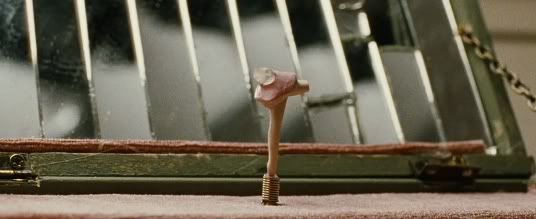
Black Swan is a textbook example of a film where every decision was consciously made to contribute to the overall atmosphere. The Sayers' apartment, the ballet company and even Nina's casting party are all precisely designed to contribute to that mounting sense of dread.
Production design — Thérèse DePrez
Art direction David Stein
Set design — Tora Peterson


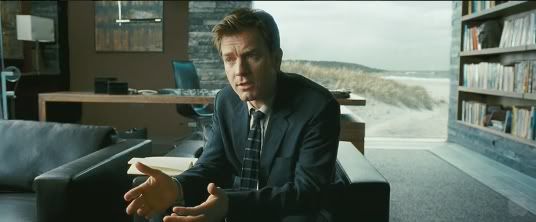
The Ghost Writer's production design makes up for what's lacking in the script. So much of the tension in the film is drawn from the foreboding sets. Highlights include a post-modern Martha's Vineyard retreat, an empty ferry terminal and a claustrophobic London book release party.
Production design — Albrecht Konrad
Art direction David Scheunemann
Set design — Bernhard Henrich and Ulli Isfort


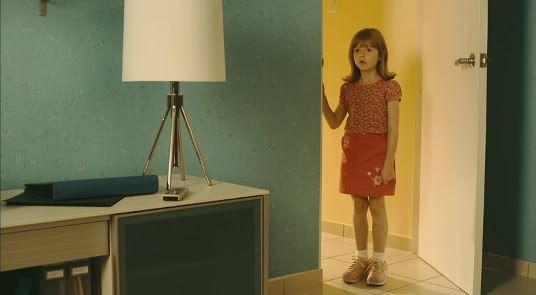
Life During Wartime uses its sun-kissed Florida setting for a surreal backdrop to the often desperate and sometimes despicable acts its characters perpetrate. As a counterpoint to the very sobering themes on display, the garish condominiums and McMansions and strip mall restaurants work their magic.
Production design — Roshelle Berliner
Art direction Matteo De Cosmo


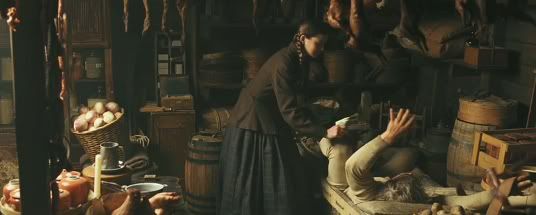
True Grit captures the grit of the old west without the usual embellishments. Mattie Ross doesn't frequent any saloons, but the places she does visit in her efforts to bring closure to her father's death — particularly Rooster Cogburn's back room abode — all exude an authenticity that's hard to fake.
Production design — Jess Gonchor
Art direction Christina Ann Wilson
Set design — Nancy Haigh

Saturday, January 29, 2011

Widescreen Awards: Musical Score

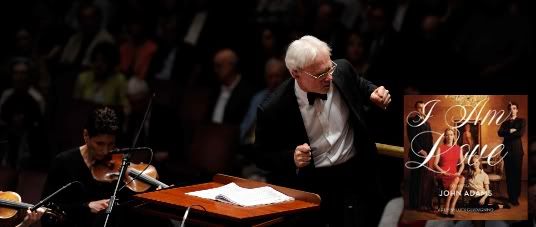
John Adams, composer for I Am Love.

Cobbled together from the back catalog of American minimalist composer John Adams, the score for I Am Love feels tailored to fit this story of reignited passion. The music lends a giddy anticipation to the film's early scenes that rises to soaring heights of ecstasy and dizzying lows of uncertainty over the course of the film.

Lee Byung-woo's score for Mother is an eclectic mix of different styles. But it's the main theme, which is most effective during Bong Joon-ho's emotional punch of an ending, that stays with you. Its ingratiating guitar seems right at home on a Thank-You-Parents bus tour, but when the twang of regret kicks in, you too will be reaching for the acupuncture needles.


Taking its cues from Tchaikovsky's ballet, Clint Mansell's score for Black Swan is perfect accompaniment for the unraveling of Nina Sayer. The themes are all familiar, even if you've never seen "Swan Lake," but Mansell finds and accentuates the melodrama and terror behind the sheet music.


Trent Reznor and Atticus Ross' score for The Social Network does what every good score should. It complements the emotional undercurrents of the film, sets the tempo for the plot and, most importantly, stays out the way. The first time I saw the film, I paid almost no attention to the score. It was almost as if it didn't exist. You only recognize Reznor's work if you're looking for it, but it contributes immeasurably to what Fincher was trying to accomplish.

It almost feels like cheating, calling attention to Hans Zimmer's already universally-recognizable Inception score. But there's so much more there beyond foghorn blasts that have rattled subwoofers all over the world. Despite a plot that always felt too structured (very much like a video game, right down to the "dream levels"), the film has a lot of complex emotion wrapped up in its subplot of a man coping with his own subconscious. Zimmer's score helps flesh that out, as well.