Showing posts with label That Evening Sun. Show all posts

Saturday, February 12, 2011

Widescreen Award: Actor


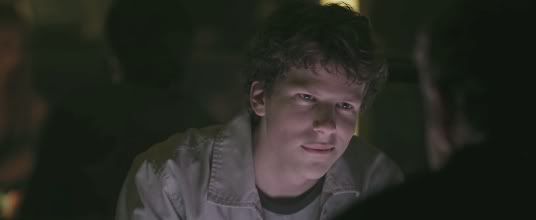
Jesse Eisenberg had a lot of things to factor into his performance as Mark Zuckerberg in The Social Network, the least of which was Mark Zuckerberg. Regardless of how closely hewn the fictional character is from its real-life counterpart, Eisenberg has crafted something for the ages. He's the self-made man who realizes too late (if you can call 26 "too late") all that he's lost. But it cuts deeper than the Jay Gatsby archetype. Eisenberg manages to convey obliviousness and self-awareness in equal measure; something that's characteristic of most twenty-somethings today. We bathe ourselves in ironies and yet very often miss what's signified.
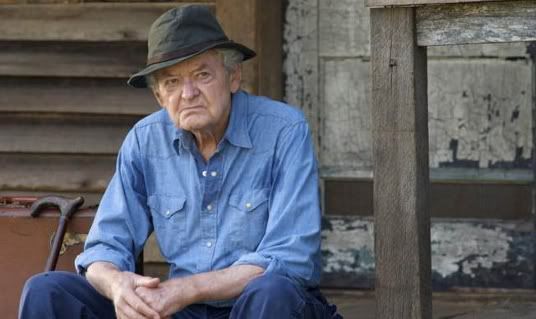

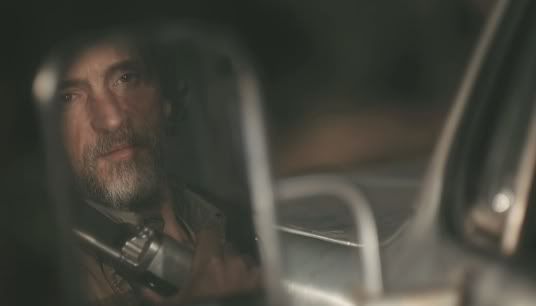
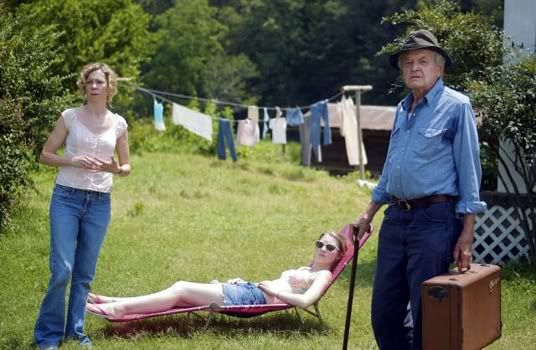
Now in his 80s, Hal Holbrook is turning in some of the best performances of his six-decade-long career. First in 2007's "Into the Wild," last year in That Evening Sun and very likely (if the adaptation takes its cues from the novel's treatment of his character) in this year's "Water for Elephants." As Abner Meecham, Holbrook tackles a lot of weighty issues, from grief to obsolescence to the onset of senility, with grace. He paints a full picture of a man full of rage, regret and remorse. It would be easy to feel one way or the other about Abner, but Holbrook always keeps it in the grey.


Teruyuki Kagawa's performance in Tokyo Sonata feels so unlike a performance, that it's easy to miss how well he communicates the weariness of laid off office drone Ryūhei. So much of his character is wrapped up in body language. How the man carries himself reveals a great deal about his mental state, indeed, far more than the platitudes and lies that leave his lips. He also has an amazing sense of timing. Kurosawa uses physical humor — watch how Ryūhei picks himself up out of the gutter — to lighten what could've been an overwhelmingly melancholy story. Kagawa is more than up for the challenge.


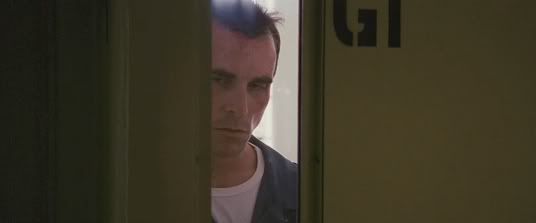
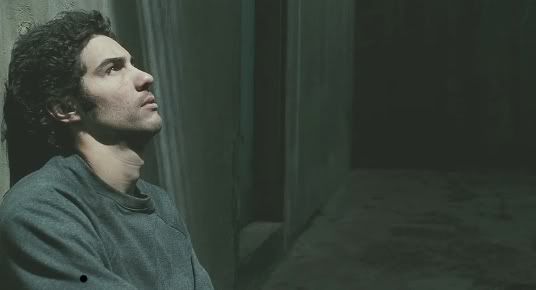
The evolution of Malik from a vulnerable Arab convict to a mob don is at first inexplicable. It's only after the film is over that it dawns on you how far he's come. Tahar Rahim handles that transition — which is integral to A Prophet — beautifully, instilling a quiet intelligence in his character. Malik, and Rahim, know not to let one hand know what the other is doing. At the same time, Rahim lets the audience in enough that the character remains sympathetic amidst his brutality and cunning.


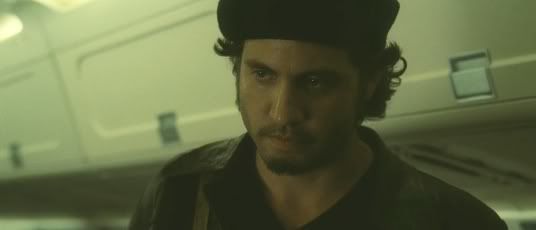
Édgar Ramírez's Carlos the Jackal is a consummate professional. Olivier Assayas' epic take on the terrorist/freedom fighter doesn't definitively answer the question of his loyalties, but one thing is clear from Ramírez's tightly-controlled performance. Carlos' first priority is himself. It's the through line in the performance, from a young, quick-witted charmer to an cruel, old has-been. Ramírez has to balance a lot of changes over the course of the film, but his focus is never lost.

Credit is also due Kim Yoon-seok who brings honesty and humor to his role as a pimp chasing down the serial killer who's been targeting his hookers in The Chaser. Alexander Siddig turns in a sensitive performance as Patricia Clarkson's escort-turned-love interest in Cairo Time. Once again, Song Kang-ho manages to be both charming and creepy as Jeon Do-yeon's unlikely lighthouse through the storm of Secret Sunshine.

Thursday, February 10, 2011

Widescreen Awards: Supporting Actor


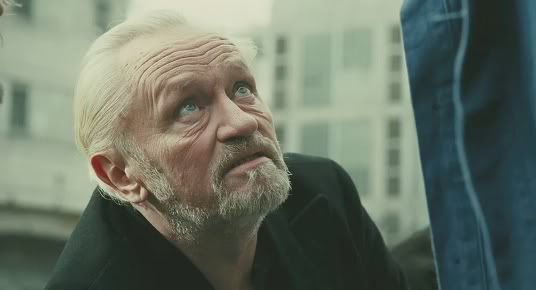
As prison-bound mob boss Cesar Luciani, Niels Arestrup starts off as an untouchable. He ends A Prophet, in true gangster flick form, as an empty shell of a man, deprived of all his power. Arestrup fills the space in between with a richness that's rarely found in this type of character. He's cold and remorseless, yet capable of trust. He's an unapologetic bigot, yet his protege and only true confidant is a "dirty Arab." It's a complex performance that never once feels forced.


Until the real Dicky Eklund shows up over the end credits, you're apt to think Christian Bale's performance is all bluster and bombast. Fortunately (or unfortunately), the genuine article is just as nutty as the carbon copy. Even so, Bale is the heart and soul of The Fighter. He's the main source of conflict in the film, but he's also the only source of redemption. Beyond the impressive external performance (the gaunt appearance and involuntary tics of a junkie), Bale fills his Eklund with a rich internal life, as well.


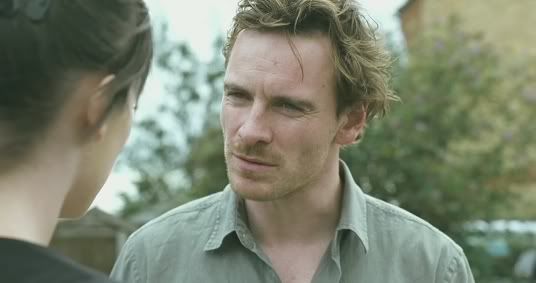
Make no mistake: Michael Fassbender's Connor, in Fish Tank, has been and always will be a monster. Fassbender seduces the audience along with his 15-year-old Lolita, and he does so while pretending to be a good, well-meaning guy. Even after his secret life -- behind a picket fence, no less -- is revealed, you can't help but think of him only as a pitiful misguided fool. It's a performance within a performance within a performance, and a stunning one at that.


In Winter's Bone, John Hawkes successfully keeps the audience guessing about Teardrop. Even after he pulls through for Ree, there's a sense that he may not be so admirable a second time. In addition to that tightrope walk, Hawkes' characterization seems so specific to the time and place, you couldn't imagine him existing in any other movie.


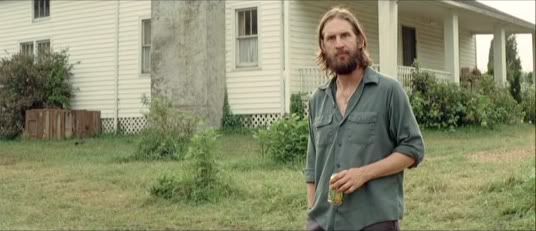
Lonzo Choate confuses providing for his family materially with being a good man. He always seems to have the best intentions, but his alcoholism and its root insecurities confront him at every turn. In That Evening Sun, Ray McKinnon manages to make Lonzo sympathetic even as he lashes out over and over again. He brings a lived-in quality to the character, even as he does the heavy lifting of reconciling the man's flaws and aspirations.

Wednesday, February 9, 2011

Widescreen Awards: Supporting Actress


Although her performance skirts a little too close to the precipice that is the cliched monster mom, Melissa Leo strikes the right balance for The Fighter. It helps that you can see where Christian Bale's Dicky Eklund gets his dysfunction from. And, by the end of the movie, you're left convinced of Alice Ward's (often misplaced) love for her sons. She'd do anything for them, true, but it's seldom the right thing.


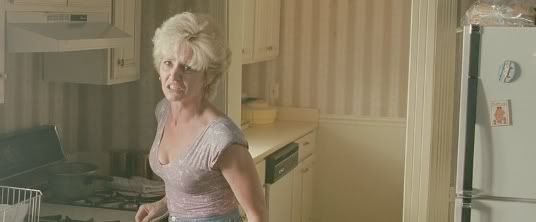
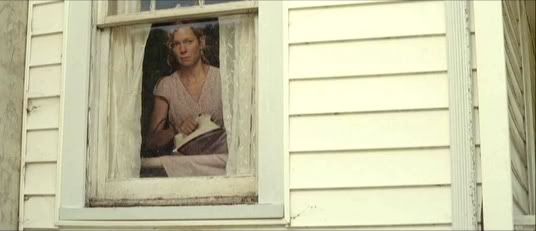
Perhaps best known as Clive Owen's Appletini-loving mark in "Duplicity," Carrie Preston turns in a quiet but captivating performance in That Evening Sun. Pushed aside in her alcoholic husband's escalating dispute with an elderly man, Ludie Choate's pain and uncertainty shines through in momentary glances. But there's still enough chemistry between her and the drunken lout Lonzo to understand why she stays.


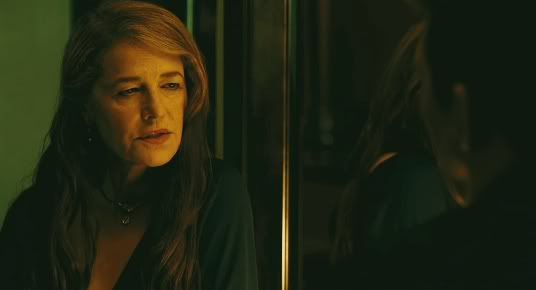
In just two scenes, Charlotte Rampling paints a nuanced picture of an aging barfly. The smell of thick perfume seems to waft off screen in Life During Wartime, in addition to the foul odor of desperation and self-pity. She's aggressive in the pursuit of her conquests, but at Jacqueline's core is a deeply insecure woman. "I'm a monster," she says, with no expectation to hear differently. It's as brutally honest and heartbreakingly funny as any film last year got.


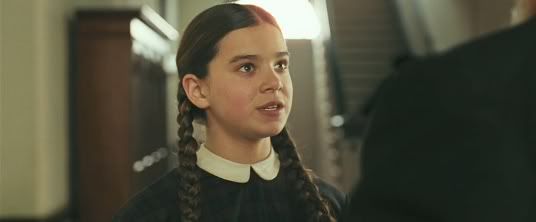
It's true that Hailee Steinfeld's Mattie Ross is closer to a lead than a supporting player in True Grit, but as Scott Rudin, the film's producer, pointed out, she doesn't exactly have an arc. Nor does she need one. Steinfeld nails this single-minded character, never seeming too precocious even while sparring with impetuous adults. It's a testament to Steinfeld that, even once we meet the woman (played by Elizabeth Marvel) she becomes, she's instantly recognizable. Aside from a lost limb, she hasn't changed a bit.


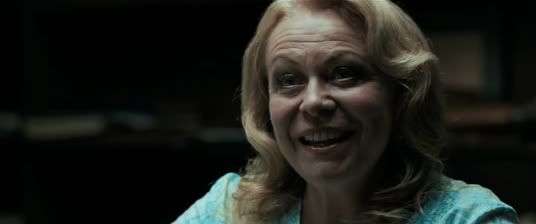
When we finally catch a glimpse of the facade that is Jacki Weaver's crime family matriarch Smurf Cody in Animal Kingdom, it's a revelatory moment. She's easily one of the best villains of the year, with her maternal hugs and broad smiles. At the same time she's scheming against her grandson, she's doing her damndest to protect her own troubled brood against the corrupt police. Can you blame her? (Well, yes, but still...)

Tuesday, February 8, 2011

Widescreen Awards: Ensemble Performance

The major awards bodies don't seem to get what an ensemble is. They tend to award films with the highest number of nominate-able performances (The King's Speech) or the most familiar faces (Black Swan) or both (The Fighter).

An ensemble is more about the collective. Although there can be, and often are, actors who stand out for one reason or another, very little of that is attributable to the filmmaker placing greater importance on one character or performance. In an ensemble, the entire cast works together for the betterment of the whole production and actors tend to have more uniform screen time.

The argument could be made that some of my choices stretch the boundaries this definition (Fish Tank and That Evening Sun have very distinct protagonists), but they still find the time for strong supporting characters and interesting subplots.


Fish Tank: Katie Jarvis, Kierston Wareing, Michael Fassbender and Rebecca Griffiths, Harry Treadaway

The oppressive world of Mia, the 15-year-old aspiring dancer at the heart of Fish Tank, is due in no small part to its cast. If they weren't comfortable diving headfirst into the uncomfortable, the film would've come across as stilted. As it is, the dysfunction feels organic to the situation. And, even at that, its tempered by real human compassion.


Life During Wartime: Shirley Henderson, Allison Janney, Ally Sheedly, Ciarán Hinds, Dylan Riley Snyder, Michael Lerner, Charlotte Rampling, Michael K. Williams, Paul Reubens and Rich Pecci

Life During Wartime is a veritable smorgasbord of compact yet wonderful performances. With a cast so large, Solondz's camera doesn't spend too much time aimed at any one actor. From Paul Reubens jilted figment of Shirley Henderson's imagination to Rich Pecci's China-obsessed, socially inept shut-in, they all make the best of it and they all contribute to the overarching story.


Night Catches Us: Anthony Mackie, Kerry Washington, Jamara Griffin, Wendell Pierce, Jamie Hector and Amari Cheatom

Recruiting two of its main supporting actors from the ranks of “The Wire,” Night Catches Us features some of the best casting of any film this year. There are no stand-outs, but they all pull their weight like a true ensemble. Jamara Griffin, in particular, turns in a realistically grounded performance as Kerry Washington’s inquisitive young daughter. For once, a movie child that looks and acts like a child, sans the capital-M maturity and sentimentality that adult filmmakers like to project onto them.


That Evening Sun: Hal Holbrook, Ray McKinnon, Carrie Preston, Mia Wasikowska, Walton Goggins, Barry Corbin and Dixie Carter

That Evening Sun offers stellar performances by a number of underappreciated familiar faces. Ray McKinnon and Carrie Preston, as the rent-to-buy tenants of Hal Holbrook’s old farm, work wonders with what could have been stock characters. “That Evening Sun” is lent even greater poignancy by the late Dixie Carter, an ethereal presence in the film and Holbrook’s wife onscreen and off,


Tokyo Sonata: Teruyuki Kagawa, Kyôko Koizumi, Yû Koyanagi, Kai Inowaki, Haruka Igawa and Kanji Tsuda

The cast of Tokyo Sonata does an almost miraculous thing. The family in the film feels like a real family coping with all the trials and tribulations real families do. There's little melodrama here; just a turning point in the life of a family that's at once universal and distinctly Japanese.

Saturday, February 5, 2011

Widescreen Awards: Adapted Screenplay


Joel and Ethan Coen exercise a light touch in adapting Charles Portis' novel True Grit. In doing so, they preserve some of the best dialogue I’ve ever heard in a western. It all rings true. It all speaks volumes about the characters through word choice alone.

The Town doesn’t seem as authentic as it would seem. For one thing, “The Town” — as the film is quick to say in a disclaimer — of today has been the benefactor or victim of urban renewal. For another, the dialogue seems to benefit from actors well-versed in the Boston accent. Where the film succeeds, however, is in its old-fashioned, tightly-written heist film script, penned by Peter Craig, Ben Affleck and Aaron Stockard.

Full disclosure. The Killer Inside Me, a first-person depiction of a Texas sheriff's deputy's descent into full-on psychosis, is one of my favorite pulp fiction novels. The film, particularly the ending, leave something to be desired. But John Curran’s script, with its regionally-specific dialogue and some beneficial plot tweaking, is not the problem.

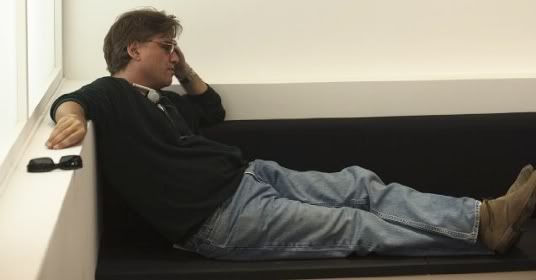
Much has been said already about Aaron Sorkin’s (pictured) rapid-fire dialogue in The Social Network. It is impressive, but that kind of dialogue is only worthwhile if it’s handled effectively by the director and the actors. (It is.) The real strength of Sorkin’s screenplay is its delicate handling of a complicated story, its multiple perspectives and the broader impact Facebook has had on its creators and the rest of us.

Writer-director Scott Teems keeps the motivations of his characters always clear — though sometimes cloaked in several layers of self-deception — in That Evening Sun, an adaption of William Gay’s short story, “I Hate to See That Evening Sun Go Down.” Teems never loses sight of the characters' humanity and, when the tension is ratcheted up, you feel for both sides in the property dispute.